Warm-Up to Cool-Down: Planning Your Class Playlist by Tempo
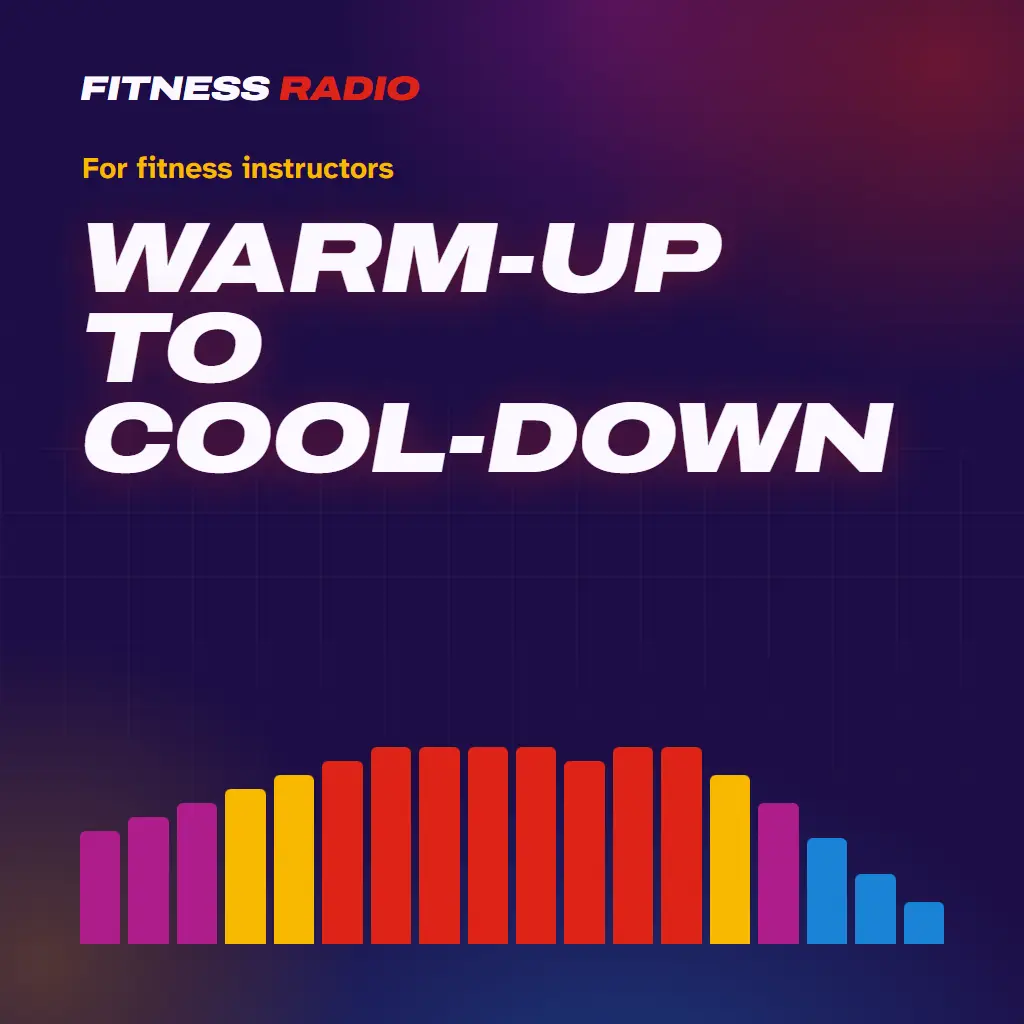
A great class has a shape. It builds, it peaks, it lands. The music's tempo is one of the strongest tools you have to draw that shape, and it's the easiest one to plan ahead.
The shape of a class
The American College of Sports Medicine's advice is simple: as you move through the warm-up, build gradually up to the tempo of the main workout, then do the reverse for the cool-down (ACSM, Music that Moves: Building a Playlist that Hits).
Tempo rises with the heart rate, holds while the work happens, and comes down with it. Jumping straight to your fastest song, or stopping cold at the end, works against the body you're coaching.
An example tempo map
Here's one way to map a 60-minute cardio class. Treat it as a starting point, not a rule:
| Part of class | Minutes | Tempo |
|---|---|---|
| Warm-up | 0 to 8 | 120, rising to 128 |
| Main work | 8 to 25 | 128 to 132 |
| Peak | 25 to 45 | 132 to 136 |
| Cool-down | 45 to 52 | Falling from 128 to 120 |
| Stretch | 52 to 60 | Under 100 |
The stretch tempo follows the American Council on Exercise, which places music under 100 BPM in the background for stretching and mind-body work (ACE, 4 Factors to Help You Understand and Master Music Selection).
Adjust the map for your format
- Step. Keep the whole class at or under 128 BPM, the ceiling in ACE's step guidelines. Our step aerobics music guide has the tempo for each level.
- Indoor cycling. Build by cadence, not just BPM. The spin class music guide maps a full ride.
- HIIT. Your peak is in the intervals, not a steady climb. The HIIT and Tabata guide has tempos that line up with the clock.
Change tempo in small steps
Big jumps between songs feel jarring, even when every song is a good one. Step the tempo a few BPM at a time through the warm-up and the cool-down, and save the bigger moves for the start of a new segment, where a change in energy is the point.
Gapless playback helps here: when one song flows straight into the next, a small tempo change feels like the class building, not like a new song starting.
One playlist, many tempos
You don't need a different song for every tempo on your map. With BPM control, you set each track to the tempo its slot needs, or lock a whole section at one tempo. The same songs your class loves can play a little slower in the warm-up and a little faster at the peak.
Don't skip the landing
The cool-down is where people decide how the class felt. Bring the tempo down, and the volume with it, so the last few minutes feel like a deliberate finish, not the moment the music ran out. Need help with the count? See How Many Songs Do You Need for a 45- or 60-Minute Class?
How Fitness Radio helps
On the instructor and gym plans, BPM control sets any track from 60 to 200 BPM, for one track or a whole playlist. Daily Mixes are 60-minute mixes at 136 BPM for the main work of class, and gapless playback carries every change from one song into the next.