Do You Have to Teach on the Beat?
No. Some classes are built on the beat and some aren't, and plenty of classes are both at different moments. The skill is knowing which one you're teaching right now, and choosing on purpose.
Two ways to use music
The American Council on Exercise describes two teaching styles in its group fitness handbook (ACE, Group Fitness Instructor Handbook, chapter preview):
- Beat-based. The class moves together, in rhythm. The instructor leads the choreography, and the timing of every cue matters. ACE lists dance, step, barre and most pre-choreographed formats here.
- Coaching-based. The beat doesn't pace the movement. People work at their own pace and effort while the instructor coaches the room. ACE lists HIIT, boot camp, cycling and sports conditioning here.
Kickboxing and aquatic exercise appear on both lists, which says it well: the format doesn't decide for you. The goal of each part of the class does.
When the beat should lead
- Choreography. Combinations, step, dance and barre are built on the count. Moving together is the point, and the music tells the room when to change.
- Toning to the count. Reps in fours and eights fit the phrase, so a set can end when the music turns over.
- Building a group. A room that moves in time feels like a team. Even a few minutes on the beat in a coaching class can do that.
When to let the beat step back
- Own-pace work. In "as many as you can in a minute", the clock sets the pace and the music sets the mood. The beat can still mark the intervals, as in our HIIT and Tabata music guide, without pacing every rep.
- Heavy or technical lifts. If staying on the count costs range of motion or control, drop the count. Form comes first.
- Learning a new move. People need time to find the shape of a move before they can put it on a beat.
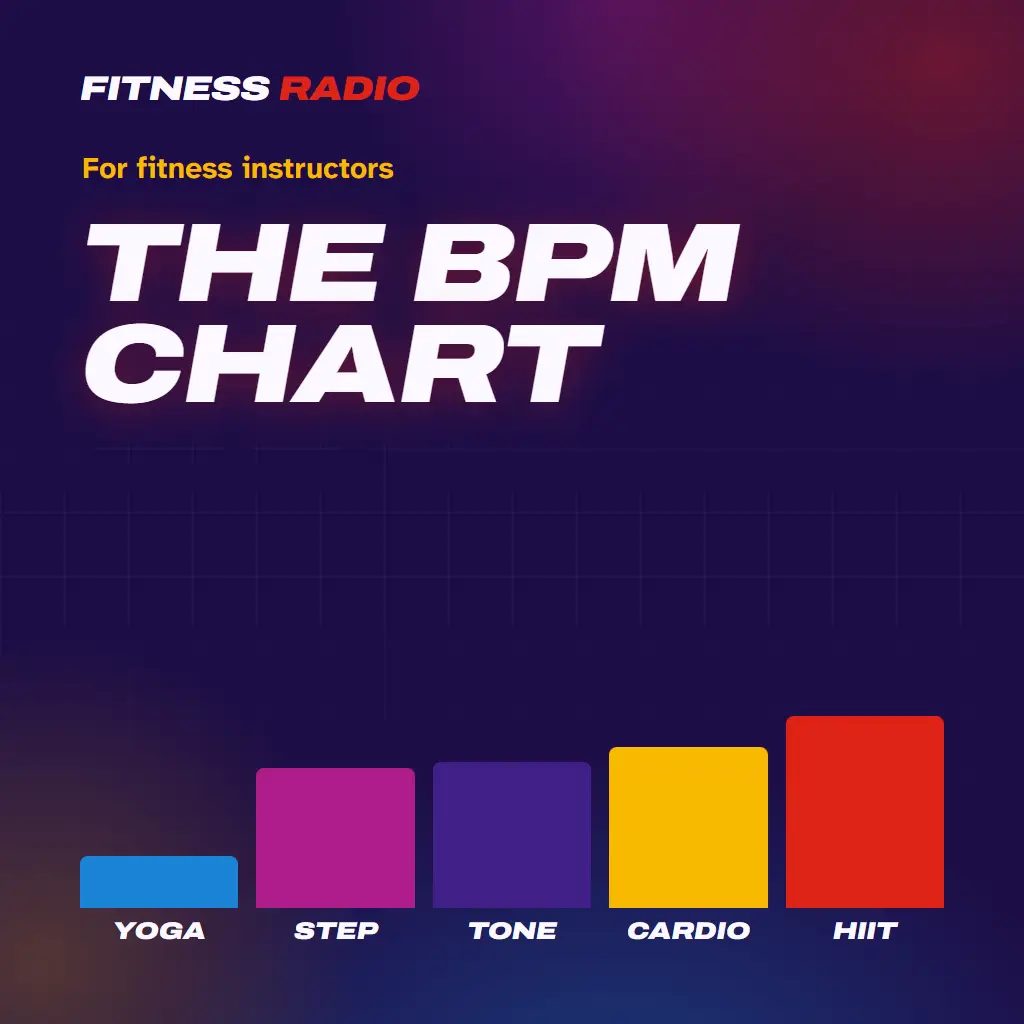
- Mind-body classes. ACE notes that music under 100 BPM is mostly used in the background, for yoga, Pilates and stretching (ACE, 4 Factors to Help You Understand and Master Music Selection).
The middle ground: half time and quarter time
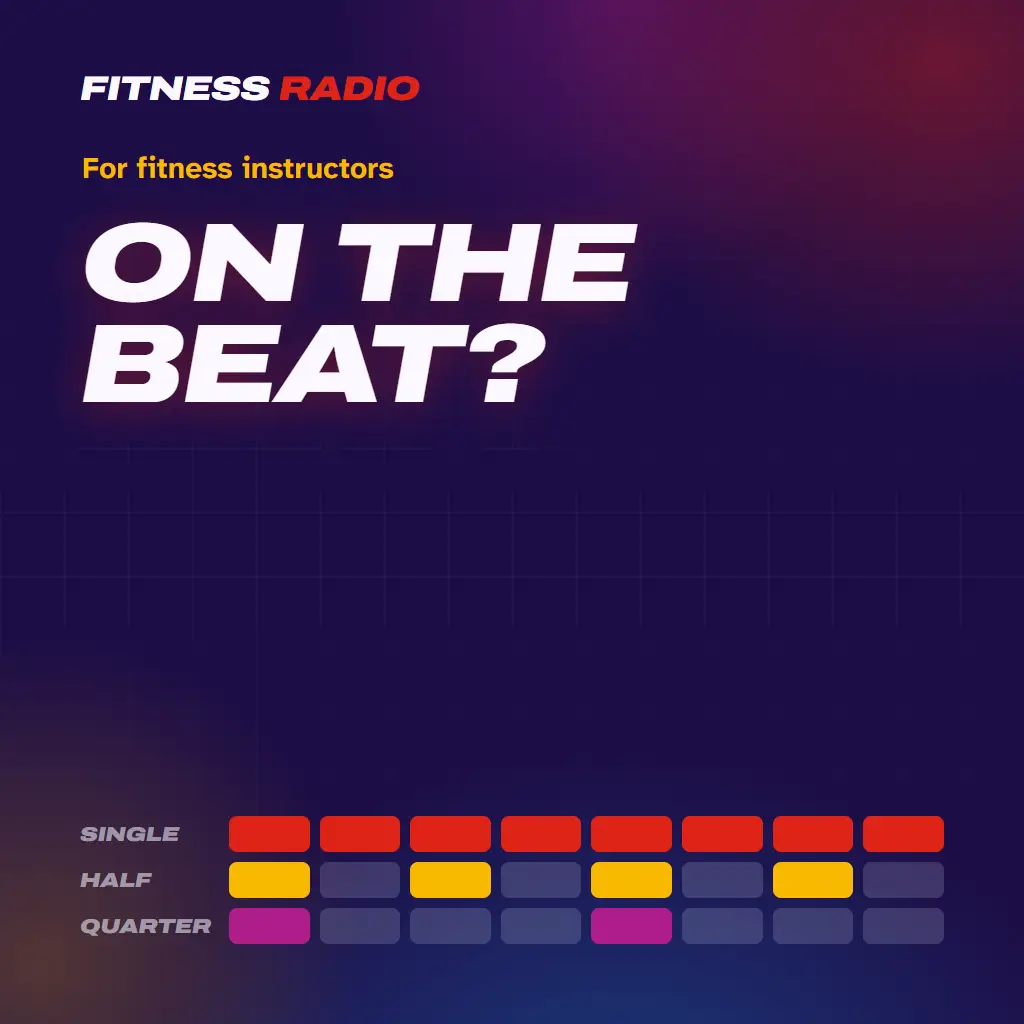
A move that's too slow for the beat can still be on the count. Give each rep more counts. Here's what that looks like for a squat at 128 BPM, where one count is just under half a second:
| Rhythm | Reps per phrase | Seconds per rep |
|---|---|---|
| Single time: 1 count down, 1 up | 16 | 0.9 |
| Half time: 2 counts down, 2 up | 8 | 1.9 |
| Quarter time: 4 counts down, 4 up | 4 | 3.8 |
ACE uses the same ladder to teach a new move from slow to fast: start at quarter time while you give form cues, move to half time, then single time once the class has it.
Or change the tempo instead of the move
Sometimes the move's natural speed sits between the rhythms, and the fix is the music, not the move. If a squat feels right at about two seconds a rep, half time at 120 BPM gives exactly that. Set the song to 120, and the move lands on the count without anyone rushing.
If you're off the beat, be clearly off it
Moving almost on the beat looks like a mistake, to you and to your class. When you choose to coach at your own pace, say so ("this one's at your own speed"), keep the music a little lower, and let it carry energy instead of tempo. When you come back to the beat, make it obvious with a cue on the count.
A quick way to decide
Ask yourself four questions for each part of class:
- Is this choreographed, or is everyone working at their own pace?
- Would the beat rush anyone's form?
- Is there a half-time or quarter-time version that fits the move?
- Is the music here to lead, or to set the mood?
How Fitness Radio fits
You'll find both 32-count phrased tracks and regular tracks in one catalog, for beat-based and coaching-based parts of class. On the instructor and gym plans, BPM control sets any track from 60 to 200 BPM, so you can fit the music to the move. Gapless playback keeps the beat going through track changes, and 60-minute DJ mixes and Daily Mixes keep own-pace work moving without a gap.