When to Cue: Counting Your Class Into the Next Move
A class that moves together on the 1 doesn't happen by luck. It happens because the cue came at the right moment: early enough to process, late enough to remember. The music tells you exactly when that is.
Cue before the change, not on it
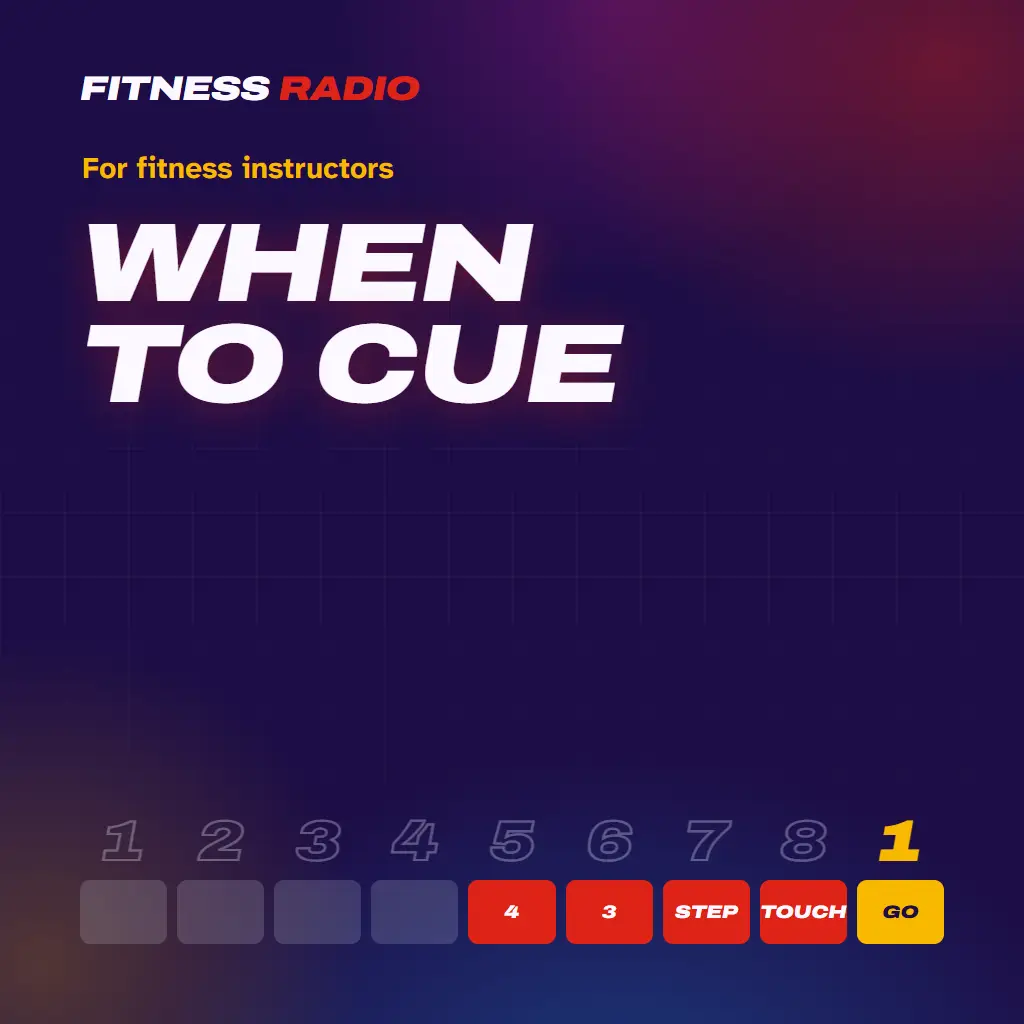
The cue that matters most is the one that tells your class what's next and when. The American Council on Exercise calls it the anticipatory cue, and its group fitness handbook says to give it at least four counts before the move starts (ACE, Group Fitness Instructor Handbook, chapter preview).
In 32-count music, changes happen at the top of a phrase. So your cue lives in the last eight counts of the phrase before it, the fourth eight-count. Here's a simple cue for a step touch:
| Count | What you say |
|---|---|
| 1 to 4 | Nothing new. Let the current move finish. |
| 5 | "Four" |
| 6 | "Three" |
| 7 and 8 | "Step touch" |
| The next 1 | Nothing. The class moves. |
If the 1 still feels hard to pin down, start with How to Find the Downbeat (the 1) in Any Song.
Count down, not up
Counting down tells your class how much time is left before the change. Counting up only tells them how much has passed. ACE's method swaps the last two numbers for the name of the move: instead of "4, 3, 2, 1", you say "4, 3, step touch", and the new move starts right after.
It also keeps your cues short. A countdown and a name are all the class needs to change on time. Save the detail for once they're moving.
Give big changes more time
Some moves need more words: a change of direction, a new arm pattern, a move with two parts. Start those cues earlier. "Five, four, turn and face the back" begins a count sooner than "four, three, step touch", so the whole cue still lands before the 1.
When a cue is complex, or the class is new, you can also stretch it at half tempo. ACE describes giving each word two counts, so the cue fills the whole eight-count instead of its back half. Slower words are easier to catch over the music.
After the cue: teach, correct, motivate
ACE orders cues in four stages, and the anticipatory cue is only the first:
- Anticipatory. What's next, and when. "Four, three, V-step."
- Instructional. How to do it well: posture, alignment, range of motion, options. "Tall spine, soft knees."
- Follow-up. Feedback once the class is moving, to correct or build on the move.
- Motivational. Energy and encouragement once the move is solid.
The order matters. Motivation lands better once people know what they're doing.
A drill to build the habit
ACE's practice drill fits in a few minutes. Play a phrased track and count the last eight of every phrase out loud, finishing with "8, 7, 6, 5, now I start to cue." Once that feels natural, replace "now I start to cue" with real moves from your class, a new one every phrase.
Practice it at your teaching tempo, then a little faster. If you can cue cleanly at 136 BPM, cueing at 128 feels easy.
Save your voice
You'll cue hundreds of times a class, so make each one count for less effort:
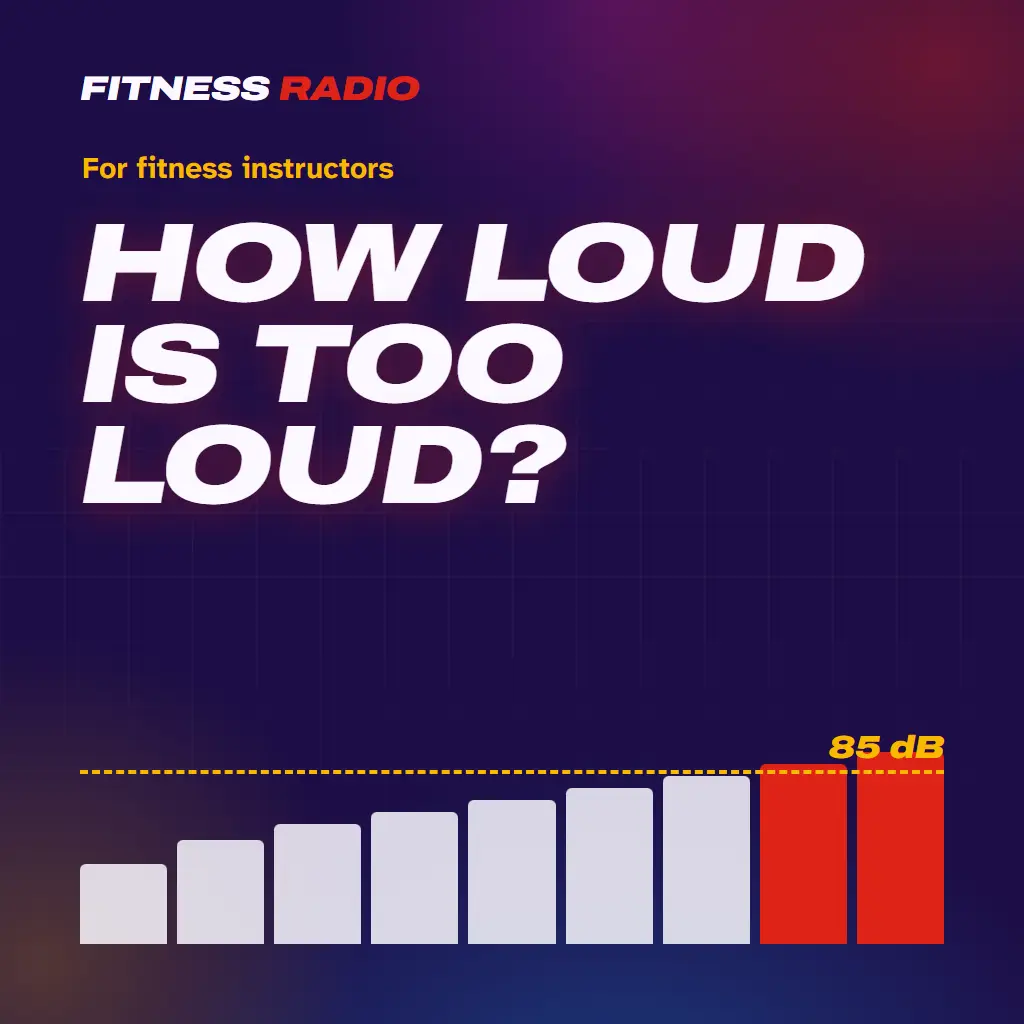
- Turn the music down. If you have to shout over it, it's too loud. ACE puts the limit for class music at 85 decibels (ACE, 4 Factors to Help You Understand and Master Music Selection).
- Speak low and clear. A lower, steadier pitch carries better than a strained high one. Use your breath, and exaggerate your consonants.
- Use your hands. A pointed direction or a held-up number of fingers backs up a verbal cue without a word.
- Sip water. Small, frequent sips keep your voice working through the class.
Let the music hold up its end
Cueing on the count only works when the count stays put. Phrased tracks keep every phrase whole, so the fourth eight-count is always where you expect it. On Fitness Radio, phrased tracks start on their first downbeat and end on a 32, and gapless playback means a track change never leaves dead air in the middle of your cue. On the instructor and gym plans, BPM control lets you slow a new combination down while you teach it, then bring it back up to speed without changing songs.
See what's included or start the 7-day free trial and practice your cues tonight.